STEM at home

Ask a Scientist: Superhuman Science Series
Ages: 10+ years
Short videos featuring named working scientists, including bioengineers, oncologists, and computational researchers, explaining their actual work in plain language. Topics span mRNA vaccine technology, gene therapy, bionic limbs, precision medicine, synthetic biology, and AI-assisted disease diagnosis. Each clip centers on a credentialed researcher, making the science feel like something real people pursue rather than a subject kids study in school. The companion educator guide on the same site is NGSS-aligned and includes hands-on family activities worth downloading alongside these videos.
Why we like it: These videos do something specific: they put a face and a research story on fields kids often encounter only as vocabulary words. Watching a biomedical engineer explain how a prosthetic limb restores sensation builds science identity in a way no worksheet can. A strong fit for curious older kids starting to ask who does this work and why.
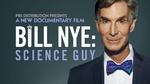
Bill Nye: Science Guy (2017)
Ages: 10+ years
This 2017 documentary follows a science communicator-turned-advocate as he takes on climate change denial, challenges to evolution, and the broader erosion of scientific thinking in public life. Produced with behind-the-scenes access, it captures him in his role as CEO of The Planetary Society, overseeing the launch of a solar sail spacecraft and debating critics in public forums. The film features appearances by Neil deGrasse Tyson and Ann Druyan. It premiered as a Documentary Spotlight at SXSW and screened at over two dozen festivals. Available on Netflix and for digital purchase. Bill Nye
Why we like it: Most STEM resources show kids how science works. This one shows them why it matters and what it costs to defend it. Watching a mechanical engineer navigate public skepticism about climate science and evolution builds something harder to teach: the understanding that science is not just a body of knowledge but a practice that requires persistence and clear reasoning under pressure.
Bill Nye the Science Guy
Ages: 8-12 years
The original Bill Nye the Science Guy ran 100 episodes in the 1990s and remains one of the most curriculum-aligned science series made for kids. Each 25-minute episode covers one topic — buoyancy, chemical reactions, genetics, plate tectonics — through demonstrations and field visits, plus a recurring segment where working professionals connect the subject to their actual jobs. A companion library of home demos at billnye.com extends the science off-screen, covering experiments in air pressure, static electricity, and light refraction. Available on major digital platforms; home demos are free. Some technology episodes show their age.
Awards: 19 Emmy Awards, including Outstanding Performer in Children's Programming (Daytime Emmy Awards)
Why we like it: The recurring scientist segment builds the habit of connecting concepts to real practitioners. Pairing episodes with the home demos converts passive viewing into repeatable experimentation, which is where the science actually sticks.
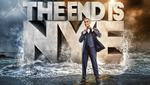
The End Is Nye
Ages: 10+ years
Each episode of this six-part Peacock series tackles one planetary threat: solar flares, supervolcano eruptions, global flooding, cybersecurity attacks, and more. Produced alongside the Cosmos team, the show places a science communicator inside a simulated disaster to work through the mechanics of each catastrophe and what Earth systems science tells us about preventing it. The content covers real geophysical phenomena, explained with specificity. Common Sense Media rates it age 10+, and that matters here. Disaster sequences are intense, with actor portrayals of people in mortal peril. Not for younger children; sensitive kids warrant a preview.
Why we like it: The structure is what makes it useful. Each episode moves from catastrophe mechanics to root causes to scientific interventions, asking the viewer to follow a chain of causation. Tracing from physical event to human consequence to scientific response is exactly the reasoning habit that transfers across subjects.
Design & Thinking
Ages: 14+ years
This 74-minute documentary asks what it actually means to think like a designer. Through interviews with founders, engineers, business strategists, and social innovators, it shows how design thinking (approaching problems through empathy, iteration, and prototyping) reshapes how people and organizations make decisions. The founders of Stanford's d.school and IDEO are among those featured. Available for digital download through the filmmakers' site.
Awards: Selected for 8 international film festivals (2012), including Newport Beach Film Festival and Palo Alto International Film Festival. Named a must-see design documentary by Forbes.
Why we like it: Design thinking is one of the most transferable thinking frameworks a young person can encounter. This film makes the case for it concretely, showing the non-linear process behind ideas that work. For a teenager starting to wrestle with open-ended problems, watching real innovators talk through ambiguity and failure is genuinely useful.
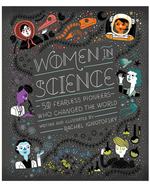
Women in Science: 50 Fearless Pioneers Who Changed the World
by Rachel Ignotofsky
Ages: 10+ years
Fifty women. Fifty fields. One book that belongs on every family's shelf. This illustrated reference profiles scientists, mathematicians, physicists, astronomers, and biologists from the ancient world to the present, including well-known figures like primatologist Jane Goodall alongside lesser-known pioneers like Katherine Johnson, the mathematician who calculated the trajectory of the 1969 Apollo 11 mission. Beyond the biographical portraits, the book includes infographics on lab equipment and women's representation in STEM fields, and an illustrated scientific glossary that invites a curious reader to linger rather than just flip through.
Why we like it: Most STEM resources teach children to do science. This one teaches them to see themselves in it. By grounding real scientific methods and discoveries in the stories of the people who made them, it builds the habit of asking who did this work, how they thought, and what they were up against. That question is a STEM skill too.
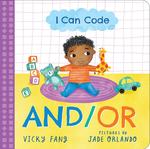
I Can Code: And/Or
by Vicky Fang
Ages: 3-6 years
Most coding books for young children stay decorative — friendly robots, colorful keyboards, the word "code" in the title. This one actually teaches something. And/Or introduces logical operators — the and/or, true/false distinctions that let you combine or qualify conditions — through a story about sharing. The lift-the-flap format asks children to reason through each outcome before revealing it, which mirrors how logical statements actually evaluate. The author is a former product designer who worked at Google and Intel Labs, and the instructional design reflects that: the concept is never explained, it's enacted. A natural companion to If/Then, the first book in this series.
Why we like it: Boolean logic is how computers make decisions. Introducing that structure through a story — before a child has ever seen a line of code — is exactly the kind of early conceptual scaffolding that sticks.
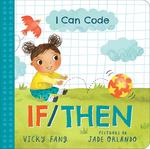
I Can Code: If/Then
by Vicky Fang
Ages: 3-6 years
Most coding books for young children stay decorative — friendly robots, colorful keyboards, the word "code" in the title. This one actually teaches something. If/Then introduces conditional logic through a story about a child and her dad at the park, where every cause-and-effect moment maps to a real programming concept: if this happens, then that follows. The lift-the-flap mechanic earns its keep here — your child acts out the logic before seeing the result, which is exactly how conditional thinking works. The author is a former product designer who worked at Google and Intel Labs, and that background shows in how cleanly the concept is embedded. Pairs well with And/Or, the companion book in this series.
Why we like it: The flaps aren't a gimmick — they make conditional reasoning something a child does, not just reads about. That physical decision point is a genuine introduction to how code thinks.
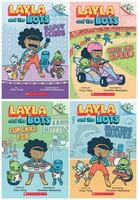
Layla and the Bots (Happy Paws, Built for Speed, Cupcake Fix, Making Waves)
by Vicky Fang
Ages: 5-7 years
Each book in this four-book series follows Layla and her robot friends as they identify a real-world problem and engineer a solution. The series was written by a former Google product designer, and that background shows: the full design process is here, from researching the problem and generating ideas to building a prototype, collecting feedback, and iterating until it works. That sequence is baked into the story, not explained in a sidebar. Each book also includes a companion hands-on project at the back, and free printable activity sheets are available on the author's website.
Why we like it: Most early chapter books feature inventors as characters but skip the actual thinking. This series shows your child what iteration looks like in practice: a plan that doesn't work, a revision, a result. That habit of returning to a problem after initial failure is one of the harder STEM skills to model at home, and this series does it quietly, inside a story kids actually want to read.
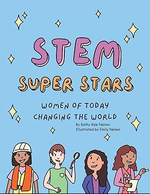
STEM Super Stars: Women of Today Changing the World
by Kathy Kale Nelson
Ages: 6-12 years
Most coloring books with a STEM theme pull from the same roster of historical names. This one doesn't. It features 25 women currently working across STEM fields -- bat biologist, crash-test engineer, astrophysicist, wind engineer, and more -- drawn from the author's own professional network built through years of hosting conversations with women in STEM. Each figure gets a coloring page with a brief blurb, plus real photos and substantive bios in the back, designed to be read together with a parent. The author is a career electrical engineer, and that background shows in how the women and fields were selected.
Why we like it: It works on two levels: the coloring pages give younger children a low-pressure entry point, while the back-section bios give older children and parents something to actually talk about. That structure is what makes this useful for building career identity -- the habit of connecting what your child is curious about to what real people actually do in STEM.